Beyond Celebration: Black History Month as a Reckoning for White Feminism
Black History Month offers a corrective lens if we are willing to use it. Black feminist thinkers and organizers have long articulated frameworks that address the very failures white feminism continues to reproduce: interconnected oppression, collective leadership, community accountability, and liberation that leaves no one behind.
The Combahee River Collective named the necessity of addressing race, gender, class, and sexuality together decades before “intersectionality” entered mainstream language. Audre Lorde taught that difference is not a threat but a source of creative power and truth-telling. bell hooks insisted that feminism without an analysis of race and capitalism reproduces harm. Ella Baker modeled leadership rooted in shared power rather than hierarchy. Fannie Lou Hamer embodied political courage grounded in collective survival rather than individual recognition.
These are not historical artifacts. They are living instructions.
And yet, white feminism has often extracted these ideas without honoring their origins, softened their radical edge for mainstream comfort, or credited white voices for frameworks built by Black women. This is another feature of white supremacy culture: ownership over collective knowledge, proximity to recognition, and control over narrative.
If Black history is the blueprint, then white feminism must confront why it keeps rebuilding fragile systems instead of following the wisdom already offered.
Comfort Is Not the Same as Safety
One of the most persistent distortions within white feminism is the belief that comfort equals safety. Discomfort becomes framed as harm, while systemic harm experienced by Black communities is minimized, delayed, or endlessly debated. Conversations about racism are treated as interpersonal conflicts rather than structural reckoning. The emotional equilibrium of white women quietly becomes an organizing priority.
Black feminist movements have consistently emphasized truth-telling, accountability, and transformation over politeness or ease. They recognize that growth requires friction, that repair requires humility, and that justice demands more than good intentions. When white feminism prioritizes being perceived as “good,” it avoids the harder work of redistributing power, resources, and leadership.
Discomfort is not danger. It is often the doorway to integrity.
What Accountability Actually Requires
Accountability means recognizing how white women have benefited from racial hierarchy, even inside gender justice movements. It means noticing where we still expect Black labor to educate, organize, and repair harm. It means paying attention to defensiveness when impact is named. It means asking where we cling to control, speed, visibility, and authority rather than practicing trust and shared leadership.
It also means releasing the fantasy that inclusion equals justice. Representation does not dismantle hierarchy. Diversity does not automatically produce equity. Without shifting who holds power and how decisions get made, harm simply becomes more diverse.
Black feminist leadership has never asked for symbolic gestures. It has always called for structural change and long-term commitment.
Practicing Black History Month Beyond February
If Black History Month is going to matter beyond seasonal symbolism, our behavior must shift after the banners come down.
That can look like:
Following and materially supporting Black-led organizations year-round.
Paying Black educators, writers, and facilitators rather than relying on unpaid labor.
Ceding leadership and decision-making power when appropriate.
Staying present when conversations become uncomfortable, rather than withdrawing.
Measuring impact rather than intention.
Practicing solidarity rooted in relationship, not performance.
Honoring Black history is not about admiration. It is about alignment. If we truly believe Black lives, brilliance, and leadership matter, then our feminism must stop protecting comfort and start practicing courage.
See you on the journey,
Robin
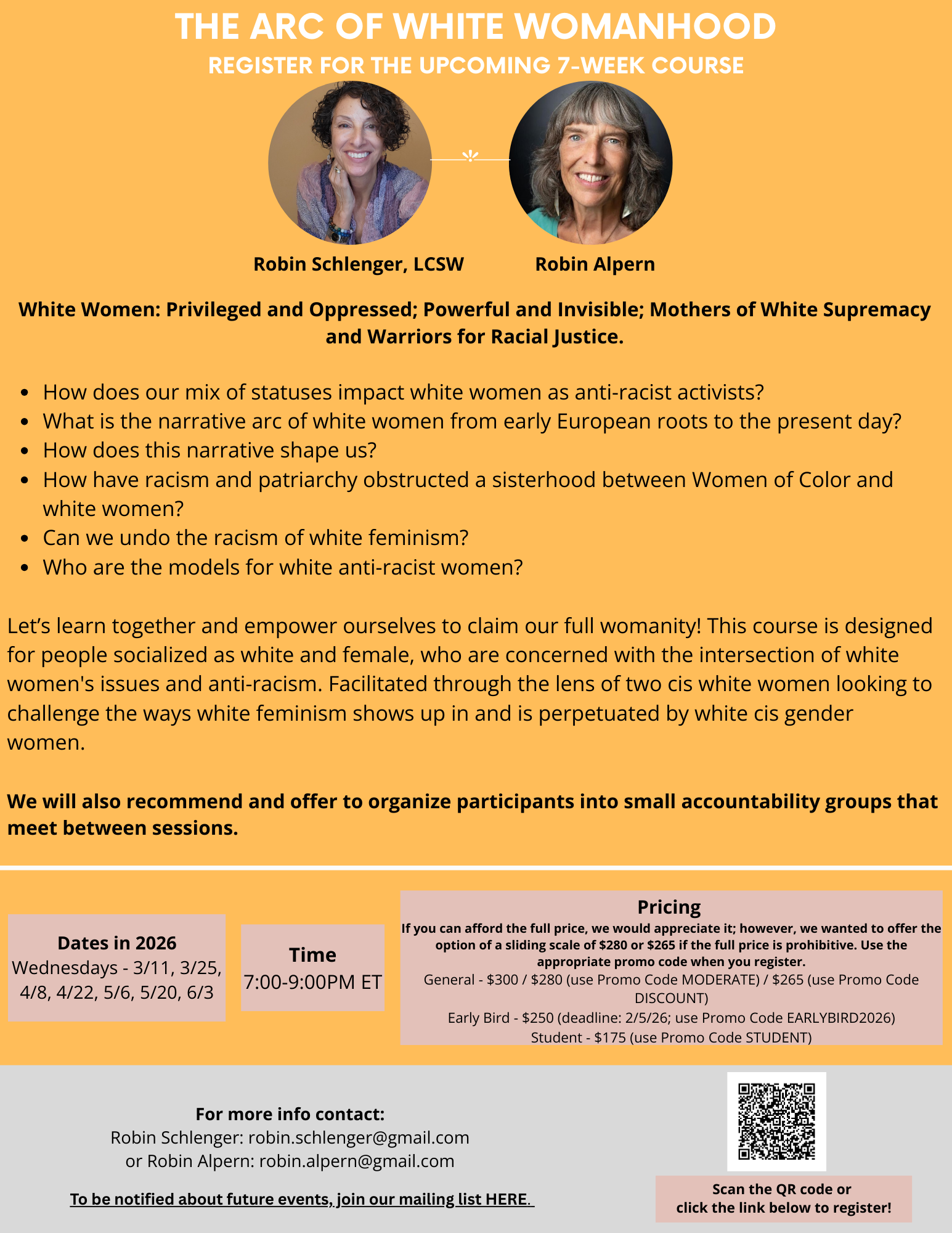
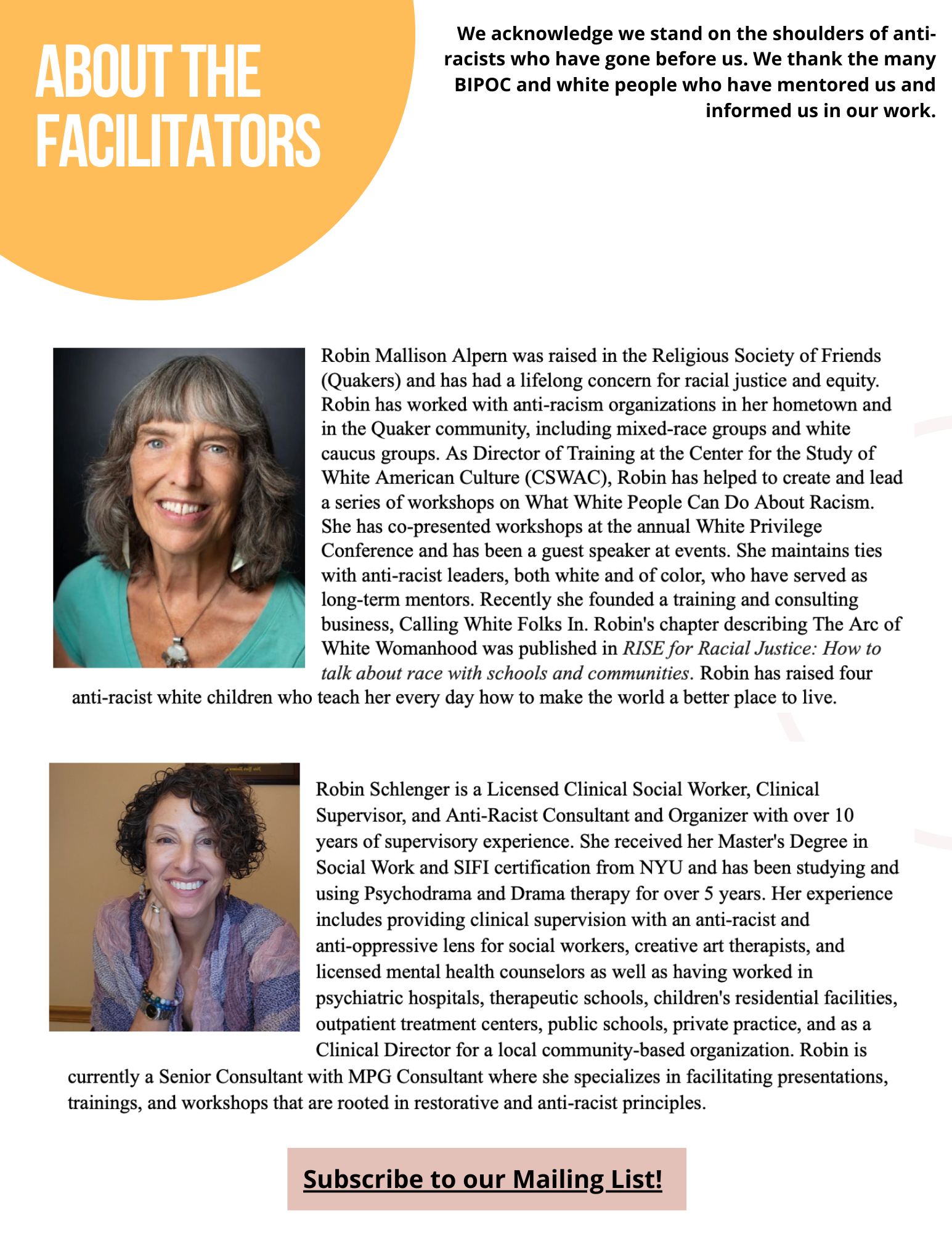
LINK TO REGISTER: https://lp.constantcontactpages.com/ev/reg/p7p9d6t
SUBSCRIBE TO OUR MAILING LIST HERE: https://lp.constantcontactpages.com/sl/Em23PJ2
PISAB: The People's Institute for Survival and Beyond: https://pisab.org/our-principles/
Center for the Study of white American Culture: https://cswac.org/: “an anti-racist, multiracial group of people who want to live in a society which has achieved racial justice and equity.”
Comrades Education (formerly White Awake) “provides educational programming, community building, and skill development in service of grassroots, working class, antiracist, and decolonial movements.”
Book: bell hooks – Ain’t I a Woman: Black Women and Feminism
Book: Audre Lorde – Sister Outsider
Article: The Combahee River Collective Statement
https://combaheerivercollective.weebly.com/the-combahee-river-collective-statement.htmlArticle: Tema Okun – White Supremacy Culture (Characteristics & Dismantling)
https://www.whitesupremacyculture.info/
Video: Kimberlé Crenshaw: “The Urgency of Intersectionality” (TED Talk): YouTube
Video: bell hooks on Love, Patriarchy, and Liberation (various interviews via The New School) - YouTube
Podcast: “Seeing White” – Scene on Radio
https://www.sceneonradio.org/seeing-white/Podcast: “The Homecoming Podcast with Dr. Thema Bryant”: https://drthema.com/podcast/