No Clean Slate: White Responsibility, Collective Power, and the Work Ahead
January arrives heavy this year. The state of the world feels heavy because it is heavy. We are living through overlapping crises—racial, political, environmental, moral—and many people are exhausted. For white people in particular, there is a temptation to respond to that exhaustion by numbing out, turning inward, or convincing ourselves that the problems are simply too big for us to affect. That belief is not neutral. It is a story that benefits the status quo.
Racism does not persist because no one understands it exists. It persists because it is embedded in systems (laws, institutions, cultural norms, and everyday practices) and because those with the most access to power often underestimate, deny, or avoid the power they already hold. One of the most damaging myths of this moment is that individual people are powerless while systems are all-powerful. In reality, systems are made real through participation, compliance, silence, and repetition. That means they can also be disrupted.
Power is not just something held by politicians or CEOs. It shows up in:
workplaces and hiring decisions,
schools and parent groups,
families, friendships, and faith communities,
voting booths, budgets, and boardrooms, and
who we protect, who we challenge, and who we listen to.
White people, collectively, still hold enormous social, political, and economic power. The question is not whether that power exists. The question is how it’s being used and whether we are willing to use it in ways that challenge racism rather than quietly benefit from it. Too often, conversations about racism get stuck in guilt, shame, or the pursuit of moral purity. That cycle drains energy without producing change. Accountability is different. Accountability is stabilizing. It doesn’t ask us to be perfect; it asks us to be responsible. It shifts the focus from “Am I a good person?” to “What is mine to do?”
For white people, accountability means:
accepting that we are implicated, whether we intend harm or not,
understanding that comfort is not the highest good,
choosing impact over approval, and
staying engaged even when the work is inconvenient or costly.
This isn’t about punishment. It’s about usefulness. Change doesn’t come from individual saviors or viral moments of awareness. It comes from sustained, collective action—people making aligned choices over time. Small actions matter because they are repeated, shared, and multiplied:
Interrupting racism at work or in family spaces,
redistributing resources through mutual aid or sustained giving,
showing up consistently for organizing, not just crises,
refusing narratives that normalize harm or dehumanization, and
following the leadership of the people most impacted.
When enough people act with clarity and consistency, systems shift. History shows this again and again.
As you move into this year, consider sitting with these questions—not to judge yourself, but to orient yourself toward purpose and action:
Where do I already hold power or influence?
(At work, in my family, in my community, through money, access, or safety.)Where have I confused discomfort with harm?
What becomes possible if I stop prioritizing my comfort?What is one place I can act consistently—not perfectly, but persistently—against racism this year?
Who am I accountable to?
Not in theory, but in real relationships and commitments.What would it mean to be useful rather than innocent?
You don’t need a clean slate to begin.
You only need clarity, responsibility, and the willingness to act alongside others.
That is how change happens—still.
See you on the journey,
Robin
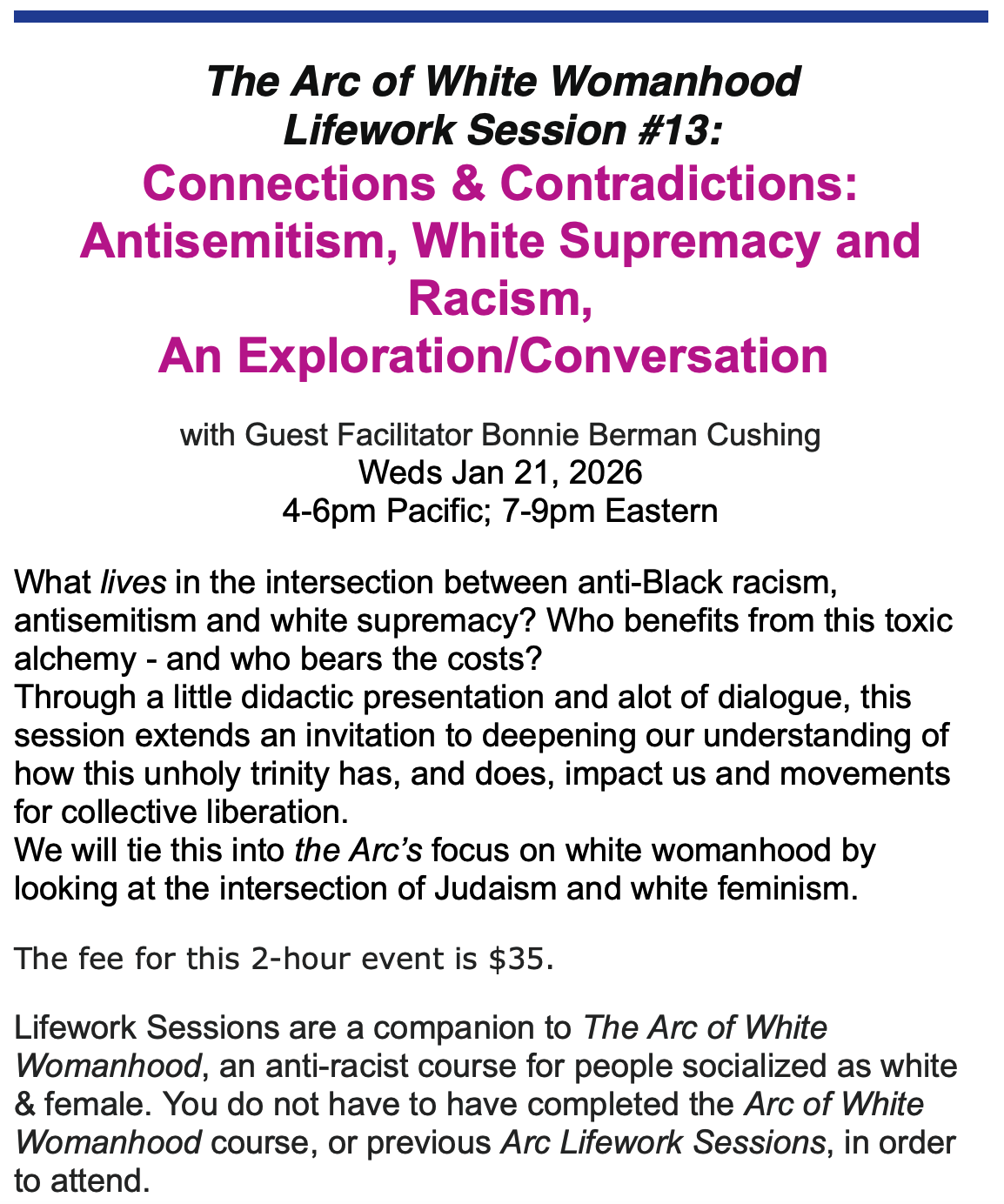
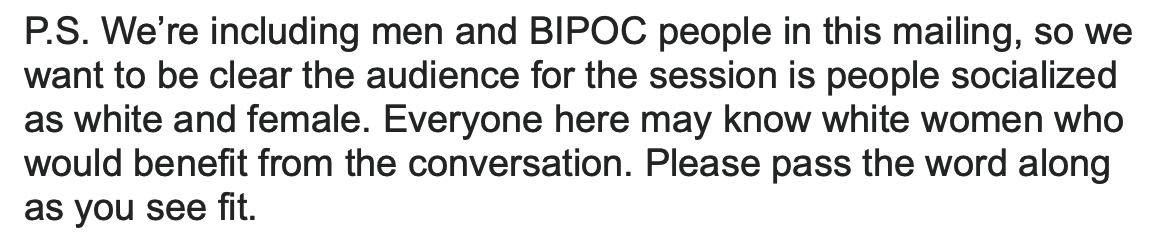
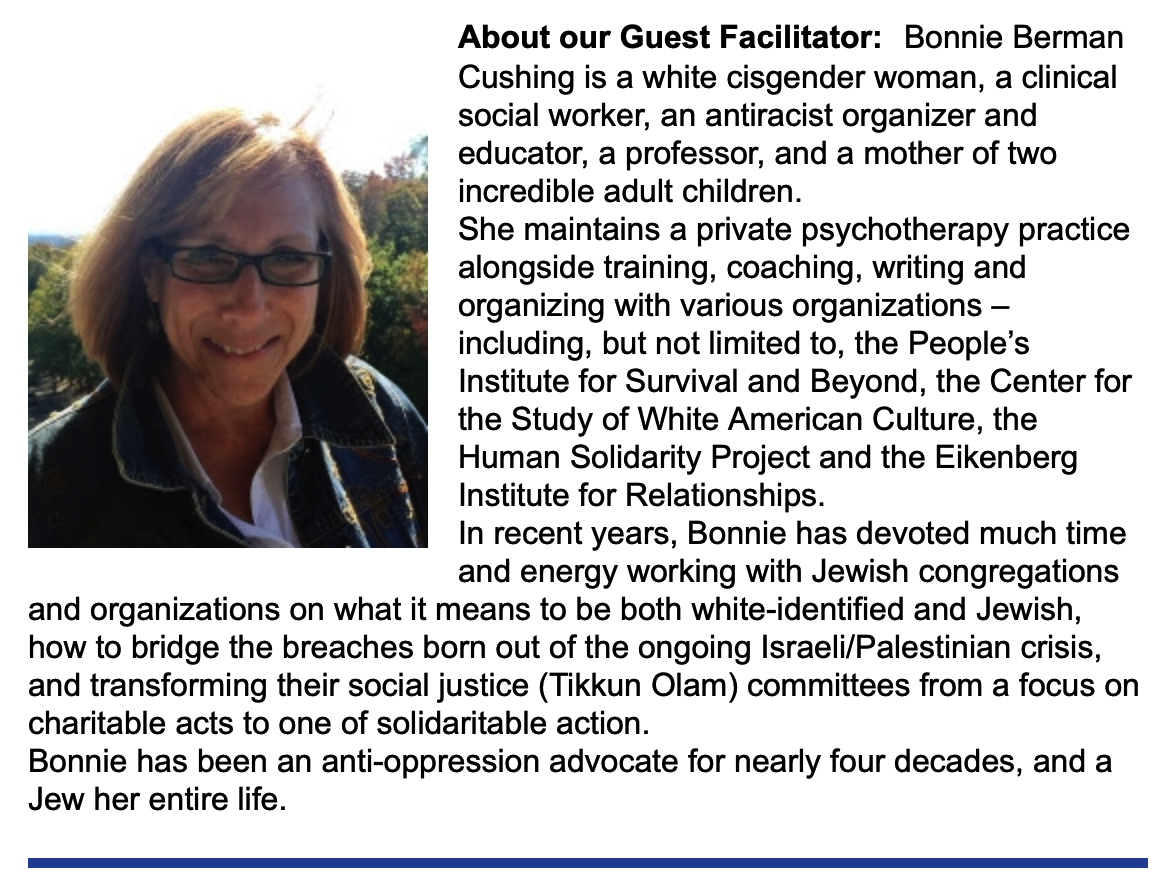
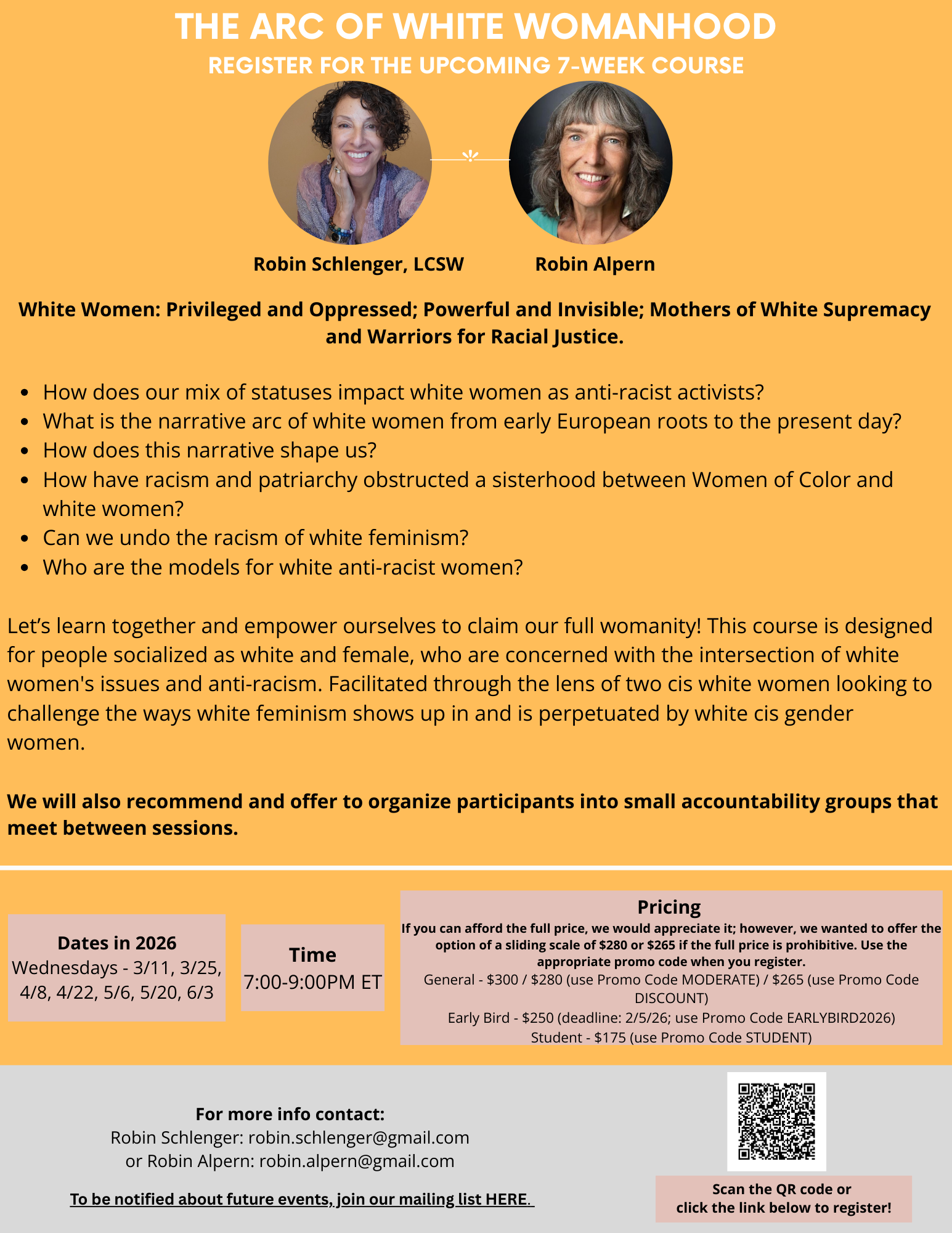
LINK TO REGISTER: https://lp.constantcontactpages.com/ev/reg/p7p9d6t
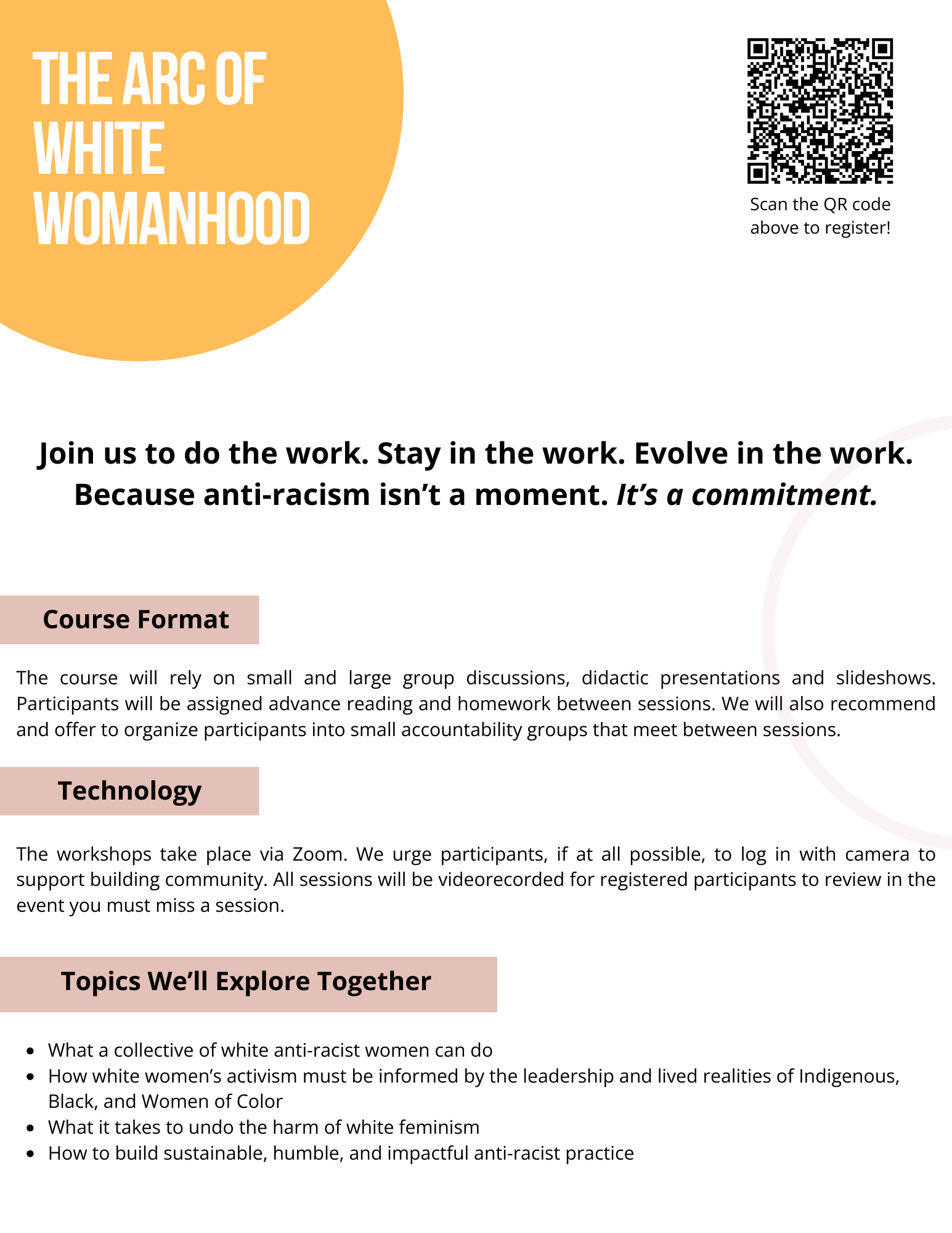
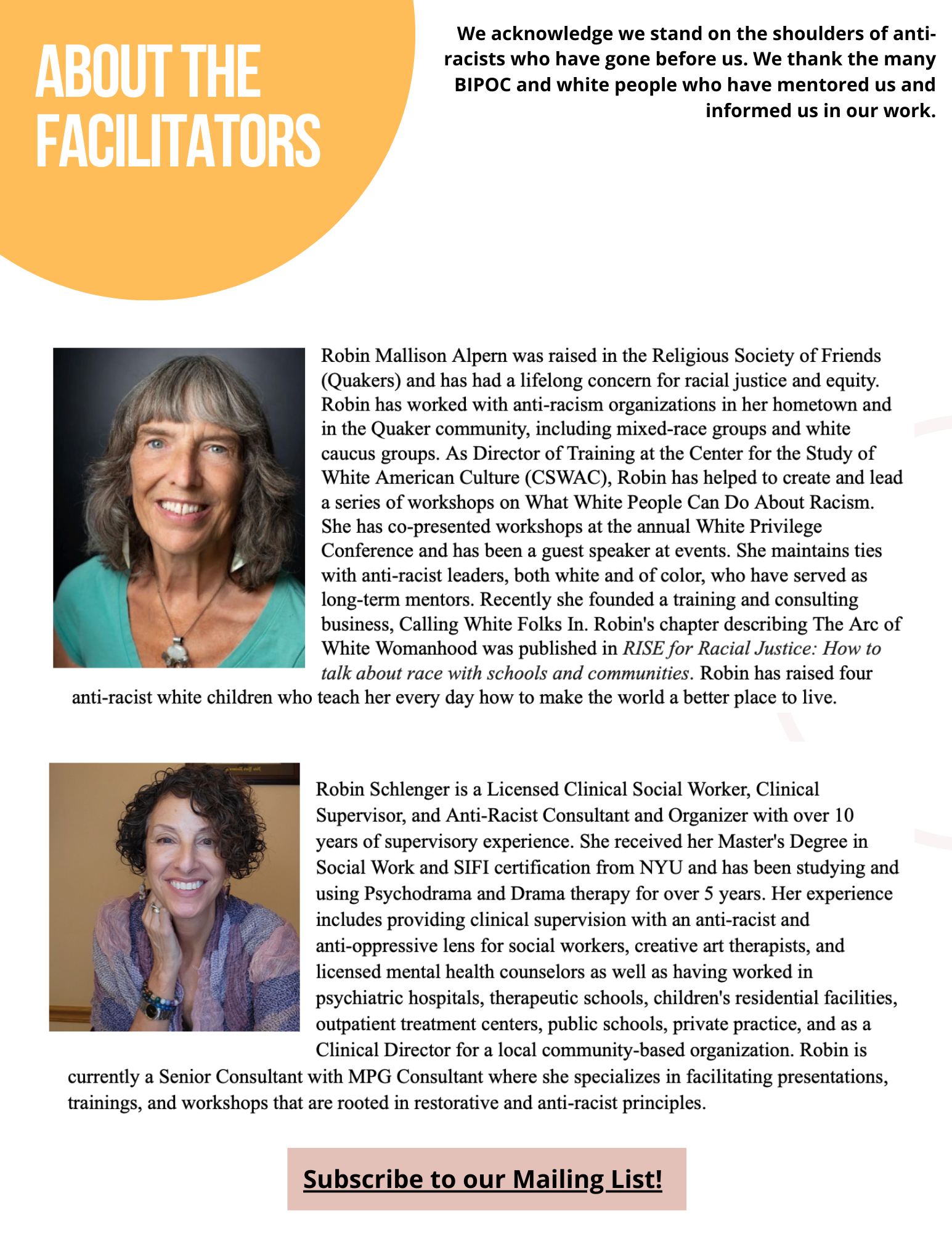
SUBSCRIBE HERE: https://lp.constantcontactpages.com/sl/Em23PJ2
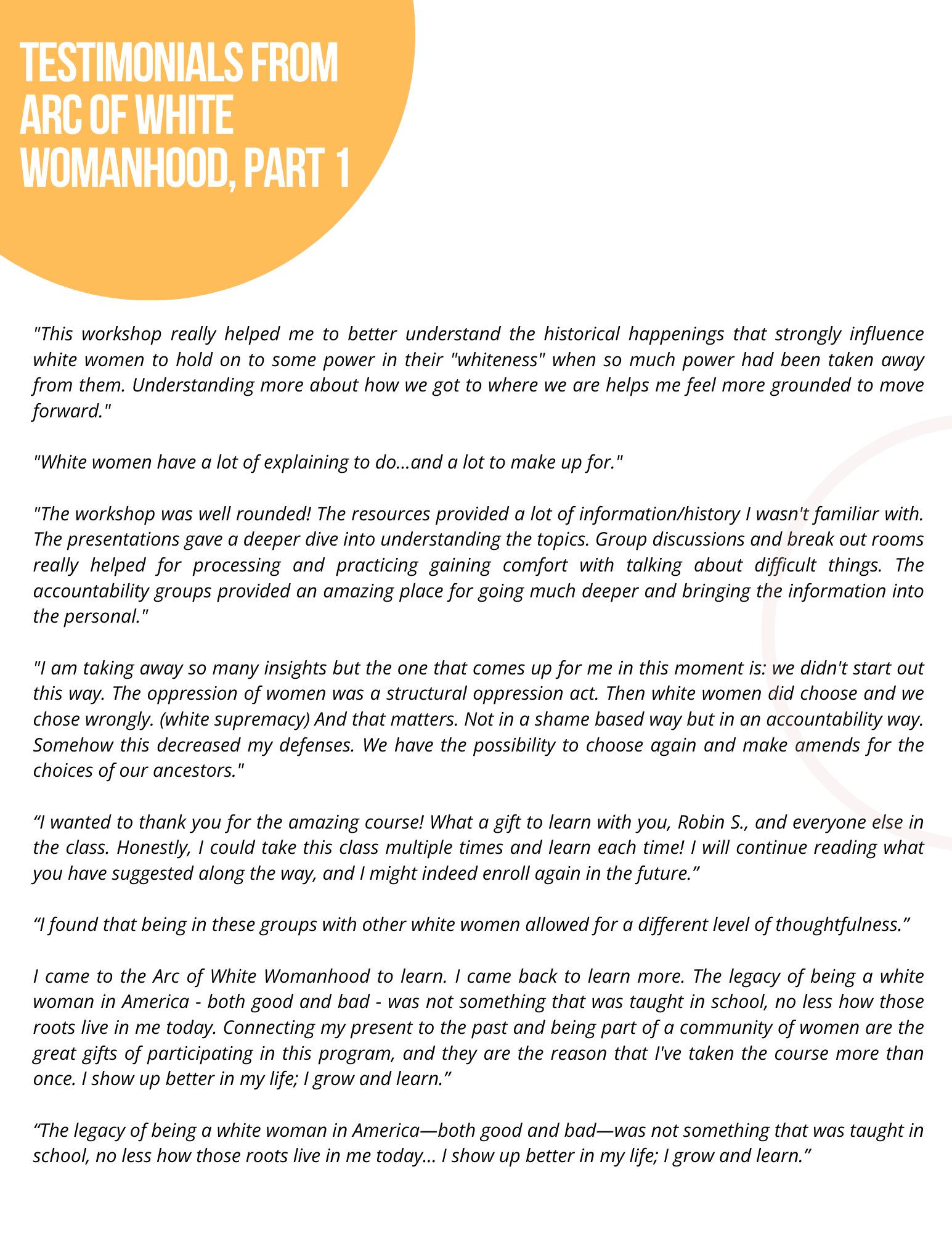
LINK TO REGISTER: https://lp.constantcontactpages.com/ev/reg/p7p9d6t
Showing Up for Racial Justice (SURJ): Offers organizing training, political education, and community spaces specifically for white people committed to sustained anti-racist action. https://surj.org/
The People’s Institute for Survival and Beyond: Provides long-standing anti-racism and organizing workshops grounded in history, power analysis, and collective liberation. https://pisab.org/
Becoming Abolitionists: Police, Protests, and the Pursuit of Freedom by Derecka Purnell - A contemporary, movement-oriented book that connects policing, abolition, and collective justice. Becoming Abolitionists (book info).
Me and White Supremacy by Layla F. Saad - A structured 28-day guide to help readers understand white privilege and racism in their lives. Me and White Supremacy overview (Wikipedia).
(Note: You can find these books through your local bookstore or library, or links on Bookshop.org or similar platforms that support independent booksellers.)
White Supremacy Culture & Anti-Racism Tools by Tema Okun’s - White Supremacy Culture site offers key writings on the characteristics of white supremacy culture and antidotes for change. Click HERE to read more.
“There Is No Neutral” by Ibram X. Kendi — Widely available online and emphasizes that in the face of injustice, “neutral” is a choice that protects the status quo. (Searchable through education and news sites; building on the blog’s theme of responsibility.)
Emergent Strategy & Social Change Discussions — Adrienne Maree Brown. In YouTube, search for "Emergent Strategies by Adrienne Maree Brown" or similar talks will connect you to conversations about collective change, relationship-based power, and organizing. YouTube
*(Because specific video links change over time, searching “Adrienne Maree Brown social change ” on YouTube will bring up recent talks aligned with the theme.)