A Year in Review: How White Supremacy Shaped 2025 and What We Must Do About It
As the year closes, it’s impossible to pretend that white supremacy is something abstract or historical. It has shaped our headlines, our neighborhoods, our politics, and our daily interactions. It harms people of color most directly and brutally, and it harms all of us by shrinking our humanity, limiting our imagination, and confining us to systems that were never built for collective thriving.
This year made it painfully clear that white supremacy isn’t just “out there.” It’s not just extremists on the news or fringe movements online. It was evident in school board fights, healthcare inequities, environmental decisions, media framing, and in our responses (or lack thereof) to injustice.
And for those of us who are white or who benefit from whiteness, it’s time to stop observing it like spectators. Our comfort has never been neutral. Silence has never been neutral. Hoping things improve without changing ourselves has never been neutral.
1. How White Supremacy Harmed Us All in 2025
It warped our understanding of safety.
Policies and conversations framed as “public safety” often meant more policing in communities of color while ignoring root causes like housing, healthcare, or education. That doesn’t make anyone safer--it just reinforces fear and division.
It fueled disinformation and moral panic.
We watched misinformation spread about books, classrooms, and entire communities. These panics disproportionately target people of color, queer people, and immigrants, but they also leave white people living in a state of fear, distortion, and disconnection.
It normalized cruelty.
From online harassment to policy decisions that dehumanize entire groups, white supremacy makes cruelty feel ordinary. The more we accept this as “the way things are,” the more we all lose our ability to feel and respond compassionately.
It cost us imagination and joy.
A society built on hierarchy limits creativity, community, and belonging. White supremacy reduces humanity to categories of dominance and scarcity. People of color pay the highest price but no one wins.
2. What We Must Do Moving Forward
This isn’t a checklist. It’s a commitment. Accountability is a practice, not a performance.
A. Get honest about our participation.
White people (including well-intentioned, progressive, “liberal,” or “quiet” white people) need to be brave enough to admit the ways we uphold these systems through avoidance, fragility, defensiveness, or a desire to stay “comfortable.”
B. Shift from guilt to responsibility.
Guilt keeps us stuck. Responsibility moves us. The question isn’t “Am I a bad person?” It’s “How am I showing up? What am I changing?”
C. Redistribute resources.
This includes money, time, platforms, job opportunities, mentorship, and influence. Structural problems require structural responses.
D. Stop outsourcing the emotional labor.
Don’t wait for people of color to educate, soothe, or guide us. Seek out the resources, do the learning, initiate the conversations, and build the stamina to stay in them.
E. Practice everyday courage.
Speak up when it’s inconvenient.
Correct misinformation even when it disrupts the vibe.
Challenge harmful jokes, comments, or policies.
Call in friends and family instead of avoiding tension.
F. Commit to ongoing learning.
Anti-racism isn’t a trend or a moment. It’s a lifelong practice that requires humility, curiosity, and consistency.
See you on the journey,
Robin
Books
Metaracism: How Systemic Racism Devastates Black Lives by Tricia Rose (2024) - https://www.triciarose.com/books/metaracism. A sharp, recent structural‑justice book connecting racism’s effects across housing, health, education, and more.
So You Want to Talk About Race by Ijeoma Oluo - https://www.ijeomaoluo.com/books. Accessible and practical, and a good entry point for readers starting to examine everyday racism.
Articles / Essays
White Supremacy Is a Suicide Pact Disguised as a Social Order by Fazer Domino (November 2025, Medium) - https://medium.com/%40fazer4541/white-supremacy-is-a-suicide-pact-disguised-as-a-social-order-2759608e81ef Medium. A recent, incisive critique of how white supremacy harms “everyone it claims to protect,” not just its victims--excellent for a 2025‑focused reflection.
White supremacy and the racial logic of the global preventing and countering violent extremism agenda by Elizabeth Mesok, Nora Naji & Darja Schildknecht (2024) -https://pmc.ncbi.nlm.nih.gov/articles/PMC11299909/ PMC. An academic‑style piece exploring how white supremacy undergirds global security policies--useful for understanding racism beyond U.S. borders.
Videos / Documentaries
Stamped from the Beginning (2023)--Documentary (based on Ibram X. Kendi’s work) - https://www.netflix.com/title/81321341. Gives a historical and cultural overview of racist ideas embedded in American institutions--a powerful visual context.
Who We Are: A Chronicle of Racism in America--Documentary (Jeffery Robinson / Sony Classics) -https://www.sonyclassics.com/film/whoweare/. A sober, deeply researched documentary tracing racism’s roots and its continuing structural impact.
Podcasts
Systemic--Podcast series -https://podcasts.apple.com/us/podcast/systemic/id1551568485. Explores how racism is woven into institutions--good for on‑the-go listening and reflection.
Code Switch--NPR podcast - https://www.npr.org/podcasts/510312/code-switch. Journalists discuss race, identity, and structural inequality — useful for unpacking cultural, historical, and political dimensions of racism.
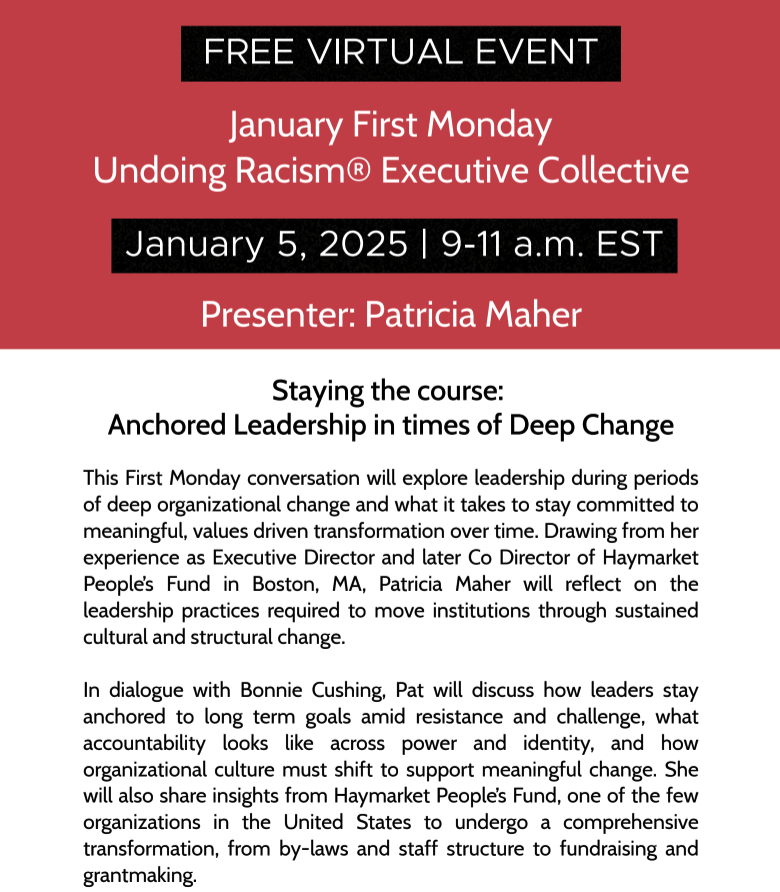
Click this link to register: https://us06web.zoom.us/meeting/register/h_bBEYD5QUWRjHtMK55LdA#/registration
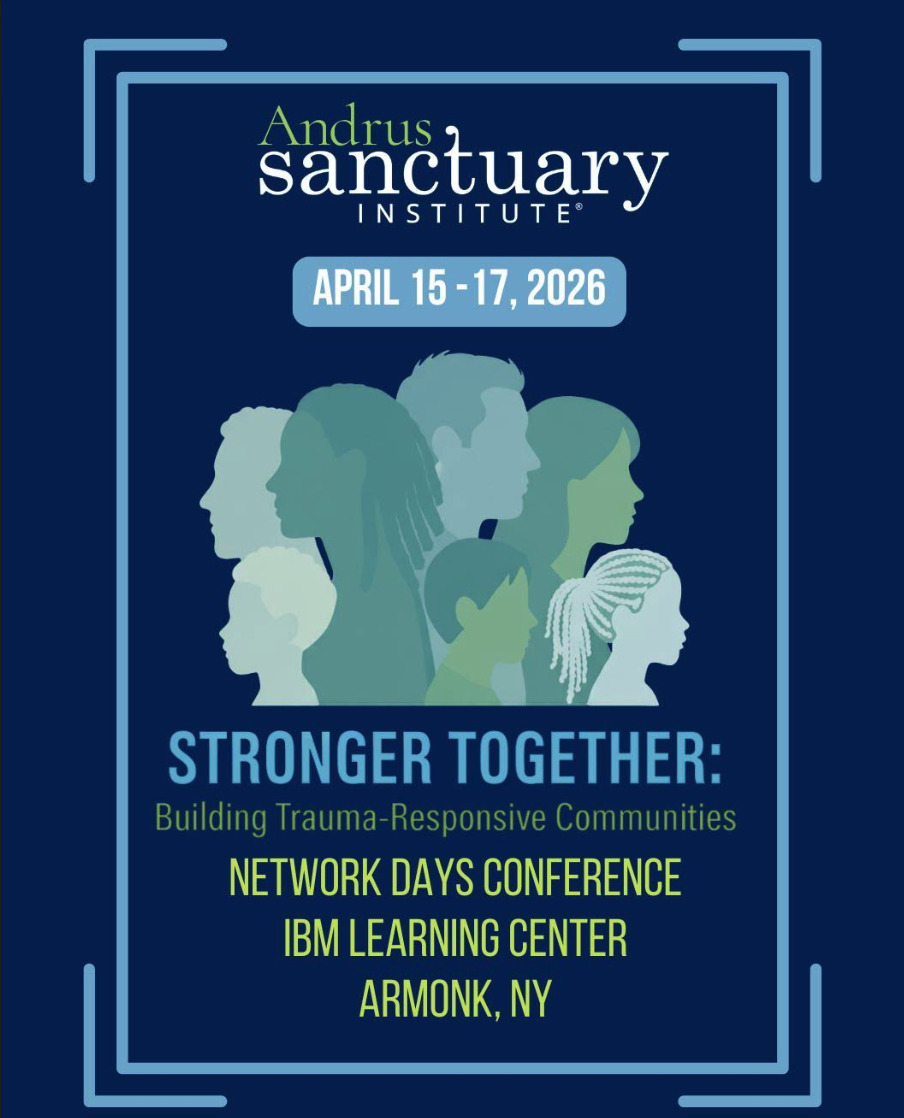
Click this link to learn more: https://www.thesanctuaryinstitute.org/network-days-conference/